Can You Choose Your Own Collision Repair Shop in Texas?
Yes. Texas law protects your ability to choose the repair person or facility that works on your vehicle after a covered accident. An insurance company may recommend a preferred body shop, but that recommendation does not take away your right to choose another repair facility. There are still important limits involving coverage, repair costs, parts, deductibles, and claim approval, so it helps to understand where your choice ends and the insurance policy begins.
Quick Answer for Texas Drivers
You can choose your collision repair shop. Texas Insurance Code Section 1952.301 says an insurer may not limit coverage by preventing a policyholder from selecting a repair person or facility. The law also addresses third-party property-damage claims, meaning the other driver's insurer cannot require you to use one particular repair shop.
Texas law also says an insurer, adjuster, or related party may not tell or suggest to a beneficiary that a specific shop, including one on a preferred list, must be used for the repair or parts replacement to be covered.
You Choose the Shop
A preferred-shop list can be offered as an option. It is not the same thing as a requirement to use one of those facilities.
The Policy Still Matters
Your right to choose a shop does not automatically require an insurer to pay every amount requested. Coverage and what is considered a reasonable repair amount still matter.
Estimates Can Change
If additional collision damage is found after disassembly, the repair facility can submit a revised estimate or supplement for the insurer to review.
What Texas Law and the Texas Department of Insurance Say
- Repair-shop choice: Texas Insurance Code Section 1952.301 protects the policyholder's ability to select a repair person or facility. It also says a third-party claimant cannot be required to use a particular repair facility.
- Preferred-shop lists: Section 1952.302 says an insurer or adjuster may not state or suggest that a beneficiary must use a specific repair person or facility, including one on an insurer's preferred list, for the damage repair or parts replacement to be covered.
- Consumer guidance: The Texas Department of Insurance states that Texas drivers have the right to choose the repair shop and parts for their vehicle. TDI also notes that an insurer is not required to pay more than a reasonable amount.
- After a wreck: TDI tells consumers that an insurer may provide a list of body shops, but the vehicle can be taken to any shop the driver chooses. If the vehicle must be towed from the crash scene, TDI also says the driver can tell the tow operator to take it to a storage lot or body shop of the driver's choice.
Research reviewed August 7, 2026. Official source links are included near the bottom of this guide.
Preferred Repair Shop vs. the Shop You Choose
An insurance company's preferred or network shop may be convenient, but it is still your decision whether to use it. The better question is not simply whether a shop is on a list. It is whether you are comfortable with the repair facility's experience, repair plan, communication, certifications, warranty, and ability to work through the claim.
| Situation | What It Means | Practical Next Step |
|---|---|---|
| Your insurer recommends a network or preferred shop | You may consider it, but Texas law protects your ability to select another repair facility. | Compare the recommended shop with the shop you prefer before authorizing repairs. |
| You already have a collision shop you trust | You can tell the insurer where you want the vehicle repaired. | Give the shop your claim information so it can coordinate estimates and documentation with the insurer. |
| The shop's estimate is higher than the insurer's initial estimate | A difference in estimates does not automatically mean either estimate is final. | Ask the shop and adjuster to review the differences. Additional documented damage can lead to a supplement. |
| You want specific parts or repair procedures | Texas protects consumer choice, but coverage and reasonable cost limits can still affect what the insurer pays. | Ask the shop and insurer how the requested parts or procedures will be handled before repairs begin. |

Good documentation can make it easier for the repair facility and insurance adjuster to compare damage, estimates, and any later supplements.
What Happens If the Insurance Estimate and Shop Estimate Do Not Match?
The insurer's first estimate is often based on what can be seen during the initial inspection. Collision damage can extend behind exterior panels, bumper covers, trim, lamps, or structural components, so the full repair plan may not be known until the vehicle is inspected more closely or disassembled.
The Texas Department of Insurance explains that when repairs cost more than the insurer's estimate, the body shop can give the insurer a new estimate. The company reviews the added repair amount and pays for the additional repairs if it agrees with the estimate.
If you are working through an insurance claim, CARSTAR Roger Williams can help with repair documentation, estimates, supplements, and insurer communication during the repair process.
Choosing Your Own Shop Does Not Mean the Insurer Must Pay Any Price
This is one of the most important distinctions in the Texas rules. The right to select your repair facility is real, but it does not eliminate the insurance policy's coverage terms or the insurer's ability to evaluate repair costs.
Decisions You Can Make
- Which collision repair facility you want to use
- Whether you want to consider the insurer's preferred-shop options
- Which questions you ask before authorizing the repair
- Whether manufacturer certification matters for your vehicle
- Whether you want to discuss a particular parts preference with the shop and insurer
Issues the Claim Still Has to Resolve
- Whether the loss is covered under the policy or accepted liability claim
- Your deductible when using your own collision coverage
- The insurer's approved repair amount
- Differences involving labor, operations, parts, or additional damage
- Rental coverage and other benefits provided by the applicable policy or claim
What About OEM Parts?
Texas rules on parts are easy to oversimplify. The state's Consumer Bill of Rights says you have the right to choose the parts for your vehicle and that an insurer may not specify the brand, type, kind, age, vendor, supplier, or condition of parts used to repair the vehicle. At the same time, TDI's auto insurance guidance says an insurer is generally required to pay for parts of like kind and quality and is not necessarily required to pay for original manufacturer parts.
In practical terms, choosing a part and getting the insurer to pay the full price for that part are not always the same question. If OEM parts, manufacturer procedures, or certification requirements are important to you, discuss that with the repair facility and insurer before the repair plan is finalized.
A useful question to ask
"If I choose this shop and this repair plan, is there any portion of the repair the insurance company says it will not pay?" Asking that early can help separate your right to choose a shop from any disagreement about the amount of the claim.
How to Choose a Collision Repair Shop After an Accident
Your legal right to choose is only useful if you know what to look for. Before authorizing repairs, consider the following:
- Ask how the shop builds the repair plan. A thorough repair starts with identifying visible damage and checking for damage that may be hidden behind panels or components.
- Ask how the shop works with insurance companies. You want clear communication when estimates, supplements, photos, documentation, or additional approvals are needed.
- Look at certification and vehicle-specific capability. Modern vehicles may require manufacturer procedures, specialized equipment, structural measurements, scanning, or calibration steps. Roger Williams has dedicated information for Honda and Acura Certified Collision Repair and Toyota Certified Collision Repair.
- Understand what happens if more damage is found. Ask who contacts the insurer, how supplements are handled, and whether repairs pause while additional work is reviewed.
- Read the authorization before signing. TDI specifically recommends reading any agreement the body shop gives you before leaving the vehicle.
- Ask about the repair warranty. Make sure you understand what is covered by the repair facility and how long that coverage lasts.
For Weatherford and Parker County Drivers
If you have been in an accident in Weatherford, Hudson Oaks, Willow Park, Aledo, Granbury, Mineral Wells, or another nearby community, you do not have to pick a body shop simply because it appears on an insurer's list.
CARSTAR Roger Williams Collision Center provides collision repair in Weatherford and can help customers work through the repair side of an insurance claim. You can also review our what to do after an accident guide and accident checklist before starting the repair process.
Request an Online Estimate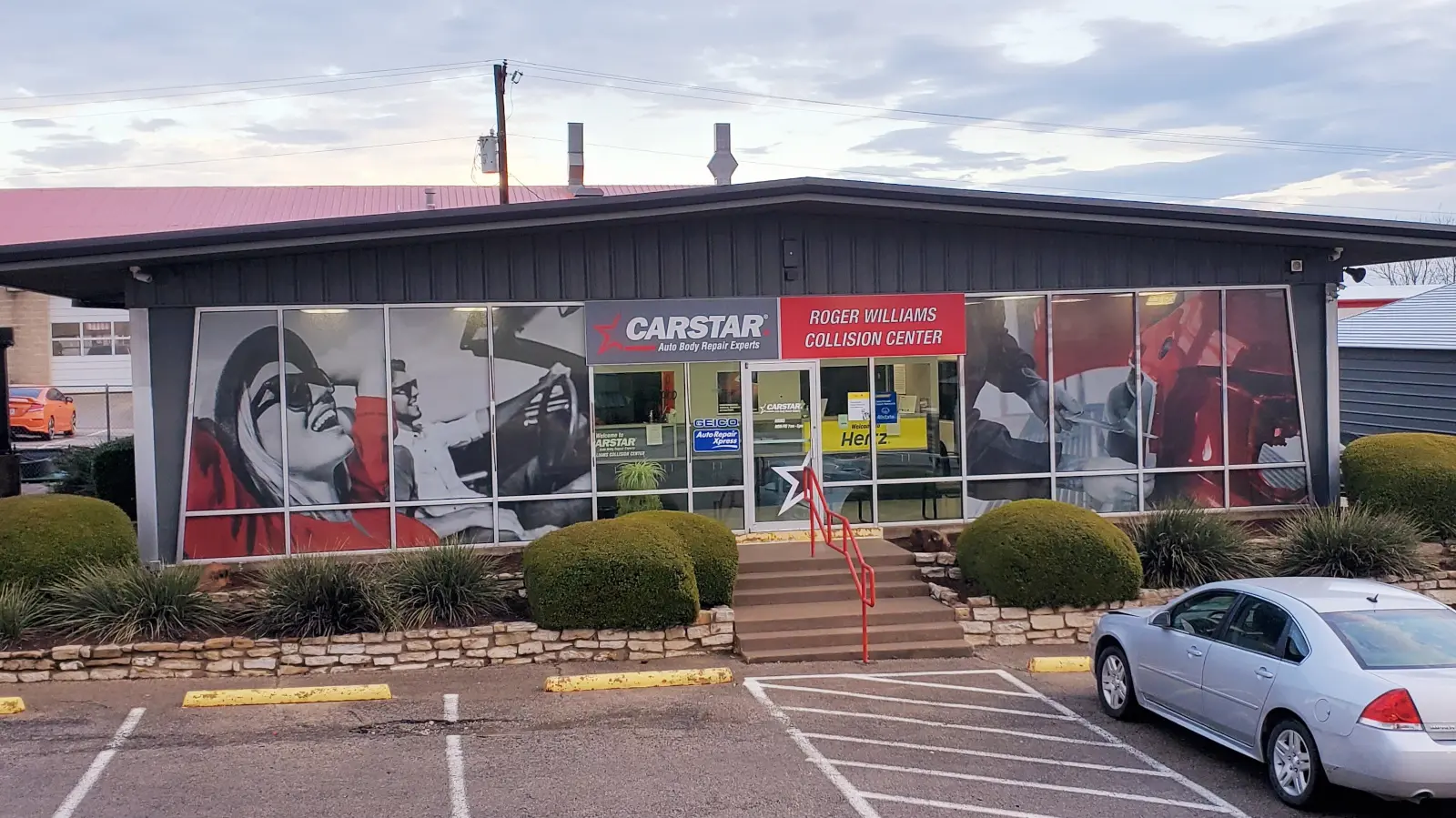
What If an Insurer Says You Have to Use a Certain Shop?
If what you are being told does not match the Texas rules described above, keep the conversation factual and document it. A practical sequence is:
- Ask the insurer to clarify the requirement in writing. There is a difference between recommending a preferred shop and saying that you must use one.
- Ask what policy language or claim issue the insurer is relying on. Sometimes the dispute is about the repair amount, parts, or coverage rather than the right to choose the shop itself.
- Have the body shop and adjuster compare estimates. If there is a disagreement about the repair plan, supporting photos, measurements, repair procedures, and estimates can help identify the actual issue.
- Use Texas Department of Insurance resources if the issue is not resolved. TDI offers consumer help and an auto-insurance complaint process for issues involving companies it regulates.
Important: This page is general consumer information, not legal advice. Insurance coverage depends on the policy, the facts of the claim, and applicable law. For a coverage dispute or legal question, contact the insurer, the Texas Department of Insurance, or a qualified attorney as appropriate.
Texas Collision Repair Shop Choice FAQ
Can my insurance company make me use its preferred body shop in Texas?
No. Texas law protects your right to select a repair person or facility. An insurer may recommend a preferred shop, but it may not state or suggest that you must use a specific shop or a shop on its preferred list for the repair to be covered.
Can I choose a body shop if the other driver was at fault?
Yes. Texas Insurance Code Section 1952.301 also addresses third-party property-damage claims and says an insurer may not require a third-party claimant to have repairs made by a particular repair person or facility.
Do I have to get my car repaired at the shop where the insurer inspected it?
TDI says an insurer may give you a list of body shops, but you can take your car to any shop you choose. An inspection or initial estimate does not, by itself, require you to have the repair completed at that location.
What if my chosen shop's estimate is higher than the insurance estimate?
TDI explains that if the repair costs more than the insurer's estimate, the body shop can submit a new estimate. The insurer reviews the additional amount and pays for the extra repairs if it agrees with the estimate. This is commonly handled through a supplemental repair estimate.
Does Texas law guarantee that insurance will pay for OEM parts?
No. Texas protects consumer choice involving parts, but TDI also says an insurer is not necessarily required to pay for original manufacturer parts and does not have to pay more than a reasonable amount. Ask the shop and insurer how any difference will be handled before authorizing repairs.
Can I have a towed vehicle taken to the body shop I choose?
TDI's post-accident guidance says that if your vehicle cannot be driven and a tow is needed, you can tell the tow operator to take the vehicle to a storage lot or body shop of your choice.
Official Sources Used for This Guide
We built this page around Texas government sources so drivers can verify the rules directly instead of relying only on general collision-repair advice.
Texas Department of Insurance: Consumer Bill of Rights
TDI's February 2026 consumer guidance summarizes the right to choose a repair shop and parts and explains the reasonable-amount limitation.
Read the TDI consumer guidanceTexas Insurance Code, Chapter 1952
Subchapter G contains the statutory provisions addressing repair-shop selection, preferred-shop requirements, repair information, and consumer notice.
Read the Texas statuteTDI: Were You in a Wreck?
TDI explains repair-shop choice after a crash, towing destination, insurer estimates, and what happens when the shop finds additional repair costs.
Read TDI's accident-claim guidanceTDI: Auto Insurance Guide
TDI's auto guide explains preferred repair shops, like-kind-and-quality parts, OEM-parts coverage, deductibles, and other claim basics.
Read the TDI auto insurance guideLast researched and reviewed: August 7, 2026. Because insurance rules and consumer guidance can change, drivers should verify current information with the Texas Department of Insurance when making decisions about a disputed claim.
Need Collision Repair Help in Weatherford?
If you have already chosen CARSTAR Roger Williams Collision Center, our team can help inspect the vehicle, prepare the repair plan, work through repair documentation with the insurer, and keep you informed as the claim and repair move forward.
Call (817) 613-1246 Book an Appointment